Electronics System Design and Manufacturing
Karnataka's ESDM Initiative
About ESDM
The Karnataka Digital Economy Mission (KDEM) is advancing Electronics System Design and Manufacturing (ESDM) as a core driver of the state’s digital economy. The focus is clear. Build strong capabilities across electronics design, semiconductor R&D, manufacturing, testing, and certification, and do it at scale.
Guided by a defined roadmap through 2025, Karnataka is strengthening its ESDM ecosystem to support innovation, industrial growth, and India’s broader semiconductor ambitions. KDEM works closely with industry, academia, and government to enable infrastructure, talent development, cluster-led manufacturing, and smoother pathways for investment.
Why Karnataka?
Karnataka is one of India’s most established ESDM ecosystems.
✅ It contributes 10% of the country’s electronics output.
✅ The state is home to over 100 fabless semiconductor design firms, making it India’s largest chip design hub.
✅ Nearly 40% of India’s electronic design output comes from Karnataka.
✅ Around 50% of the nation’s electronic product companies operate here.
Backed by global R&D centres, advanced testing facilities, and Electronics Manufacturing Clusters across the state, Karnataka offers a design-led, manufacturing-ready environment that supports the entire electronics and semiconductor lifecycle.
Au milieu d’un secteur de plus en plus saturé, https://lucky31fr.fr parvient malgré tout à conserver une voix bien à lui. Les fiches FAQ couvrent autant les sujets techniques que les questions de jeu responsable. Les amateurs de jeux Drop & Win bénéficient d’une rotation hebdomadaire des tournois associés. Le programme d’ambassadeurs récompense les joueurs les plus engagés avec des avantages réguliers. Les free spins distribués lors d’événements ponctuels viennent s’ajouter aux promotions régulières. Les studios partenaires diffusent en continu depuis des plateaux conçus pour reproduire l’ambiance d’un véritable casino. L’absence de frais sur les retraits crypto séduit une part croissante d’utilisateurs. Le tableau de bord mobile reprend les fonctionnalités principales sans simplifications excessives. Un éventail de qualités qui font de cette adresse un choix raisonné dans le paysage francophone.
Karnataka's ESDM Initiative
About ESDM
The Karnataka Digital Economy Mission has been unwavering in its commitment to harness the limitless potential of the state’s digital economy. With Electronics System Design and Manufacturing (ESDM) as one of the core verticals, KDEM to build a robust ESDM infrastructure in the state with a clear roadmap chalked for the year 2025 and ensuring Karnataka leads the way in advancing the country’s semiconductor game.
Why Karnataka?
Karnataka is a leader in the Semiconductor and ESDM sector.
✅ 10% Contribution to National Electronics output
✅ Above 100 Fabless chip design houses and is the largest Chip Design Hub in India
✅ 40% contribution to the National share in electronic design
✅ 50% contribution to the National share in electronic product companies
Existing ESDM Clusters in Karnataka
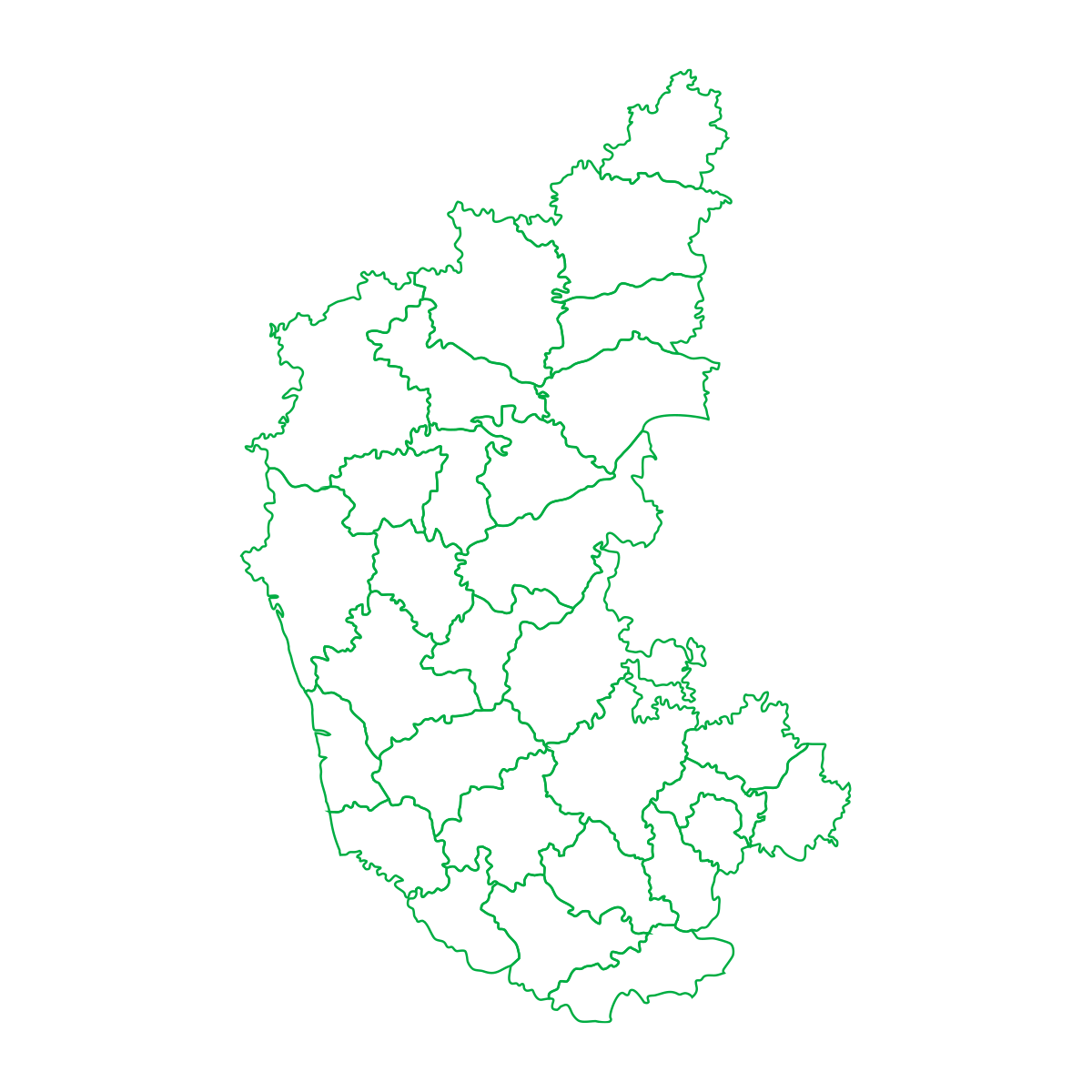
- Mysuru
- Hubballi/Dharwad/Belgaum
- Bengaluru
- Mangaluru
Mysuru plays a critical role in Karnataka’s ESDM ecosystem by anchoring testing, certification, and semiconductor enablement infrastructure. The city hosts the Lahari Advanced Testing and Certification Facility, an ISO 17025–accredited centre that supports EMI/EMC, safety, environmental, and reliability testing. Lahari functions as a single-window facility for product validation and compliance, helping electronics companies accelerate product development and meet global quality standards.
To further strengthen semiconductor readiness, the Government of India and the Government of Karnataka have approved a multi-tenancy clean room facility in Mysuru. This shared infrastructure model is designed to attract compound semiconductor, OSAT, and ATMP players by significantly reducing initial capital investment requirements, making Mysuru an accessible entry point for advanced semiconductor activities.
Under the EMC 2.0 scheme of MeitY, Mysuru has received 7 Letters of Intent with proposed investments exceeding ₹1,300 crore. More than 230 acres of land have been approved for the cluster, with the potential to generate over 1,200 jobs, reinforcing Mysuru’s position as a key ESDM hub beyond Bengaluru.
Lahari – A World Class Testing and Certifying Facility – Set up in the historic city of Mysuru, to provide Testing, Quality & Regulatory needs of the regional electronic industry. Lahari has the arsenal of “Advanced Technologies and methodologies” to help grow the local electronic industry, encourage new investments and new product designs. In short, Lahari is a “ONE STOP SHOP for PRODUCT DEVELOPMENT & COMPLIANCE WORK” – dedicated to ESDM.
GoI & GoK has approved the proposal for setting of Multi-tenancy Clean Room in Mysuru. The cleanroom facility would be a crucial element in attracting compound semiconductor / OSAT / ATMP companies into the state as it would ease the investing companies’ burden of initial capital investment. It can also be stated that this model of business would also be one of the key elements for attracting the semiconductor investments into the state of Karnataka.
Under EMC 2.0 Scheme of MeitY, 7 LoI’s worth 1300+Cr has been signed. With over 230 acres of land approved, over 1200 jobs will be facilitated in Mysuru.
The Hubballi–Dharwad–Belagavi region is emerging as a key manufacturing-focused ESDM cluster within Karnataka’s distributed electronics ecosystem. Positioned to support scalable electronics manufacturing and ancillary industries, the cluster strengthens the state’s capacity beyond its traditional design centres.
Under the EMC 2.0 scheme of MeitY, the region has secured 11 Letters of Intent with proposed investments exceeding ₹300 crore. Around 200 acres of land have been approved for the development of the cluster, creating a strong foundation for electronics manufacturing expansion.
With the potential to facilitate over 2,000 jobs, the Hubballi–Dharwad–Belagavi cluster contributes to balanced regional growth while reinforcing Karnataka’s broader ESDM manufacturing and supply-chain capabilities.
Under EMC 2.0 Scheme of MeitY, 11 LoI’s worth 300+Cr has been signed. With over 200 acres of land approved, over 2000 jobs will be facilitated in Hubballi.
Toy Manufacturing Cluster – Envisaged under the Product Specific Industrial Cluster Development Programme of the government of Karnataka, this is the first cluster in India dedicated for manufacturing toys. The cluster is also estimated to attract an investment of over Rs 4,000 crore and create over 25,000 direct jobs (mostly for women in North Karnataka) and over a lakh indirect job.
Bengaluru forms the design and R&D core of Karnataka’s ESDM ecosystem. The city hosts the country’s largest concentration of fabless semiconductor design companies and a dense network of global electronics and semiconductor R&D centres. A significant share of India’s electronic design output originates from Bengaluru, reinforcing its role as the state’s primary source of engineering talent, IP creation, and advanced system design.
With strong capabilities across semiconductor design, electronic systems engineering, embedded software, and product development, Bengaluru acts as the upstream engine for Karnataka’s ESDM value chain. The city’s design and research strength directly supports manufacturing, testing, and scale-up activities across clusters beyond Bengaluru.
Mangaluru is identified in the presentation as a key cluster under Karnataka’s Beyond Bengaluru strategy, supported by its strategic coastal location and port-led connectivity. While the cluster is highlighted with a primary focus on FinTech and digital services, its infrastructure and logistics advantages position it as an important enabler within the state’s broader digital and industrial ecosystem.
Its inclusion reflects Karnataka’s intent to diversify digital and technology-driven clusters across the state, complementing core ESDM activities anchored in design, manufacturing, and testing hubs elsewhere.
Policies and Schemes
Electronic Systems – India is one of the largest consumer electronics markets in Asia Pacific Region. The world’s fastest-growing industry, Electronics System Design and Manufacturing (ESDM) continues to transform lives, businesses, and economies across the globe. The Government of India attributes high priority to electronics hardware manufacturing, as it is one of the crucial pillars of Make in India, Digital India, and Start-up India programmes.
India is expected to have a digital economy of $ 1 Tn by 2025. India’s semiconductor market is expected to increase from ~$ 15 Bn in FY20 to ~$ 110 Bn in FY30, growing at a CAGR of 22%.
Government of India Policies and Schemes
- Electronic Component Manufacturing
- Semiconductor and Display Manufacturing
Government of Karnataka Policies and Schemes
Develop Karnataka into a global ESDM hub and a hotbed of innovation through focused interventions and encouragement to local companies in the sector.
- Stimulate the growth of 2000 ESDM start-ups during the policy period.
- Enhance value addition done in Karnataka by 50%.
- Create 20 Lacs new jobs in the ESDM industry by 2025, both direct and indirect, thereby increasing the total workforce in the sector to ten times the present number.
- Effect a quantum jump in the overall revenues of Karnataka’s ESDM companies to USD 40 billion by 2025.
- Capital Investment Subsidy: 20% of eligible capital expenditure on Plant & Machinery
- Land Subsidy: 25% of expenditure on land up to an extent of 50 acres (only in districts other than Bengaluru Urban & Rural)
- Stamp Duty Reimbursement: 100%
- Registration fee reimbursement: 100%
- Reimbursement of Land conversion fee: 100%
- Incentive on Power & Electricity Duty:
- INR 1 per unit for 5 years from the month of commencement of commercial production
- 100% exemption for 5 years from the month of commencement of commercial production
- Production Linked Incentive (PLI) Scheme: 1% of annual turnover for a period of 5 years
ESDM Infrastructure
Skilling Infrastructure & Labour Environment:
Karnataka has a strong talent ecosystem supported by institutions such as IISc, IIM, NID, and IIITs, along with engineering colleges, polytechnics, ITIs, and GTTCs. Skill development is driven through programs like Semiconductor Fabless Accelerator Lab (SFAL), Chips to Startup, SMART Lab, and industry collaborations.
- ✅ Two Electronics Manufacturing Clusters (EMCs) are approved in Mysuru and Hubballi–Dharwad–Belagavi.
- ✅ Mysuru EMC: 234 acres, 7 LoIs, ₹1,300+ crore investment, 1,200+ jobs.
- ✅ Hubballi EMC: 200+ acres, 11 LoIs, ₹300+ crore investment, 2,000+ jobs.
ESDM Infrastructure
Skilling Infrastructure & Labour Environment:
Institute of Excellences: Indian Institute of Management, Indian Institute of Science, National Institute of Design, International Institute of Information Technology etc.
- ✅ Two Electronics Manufacturing Cluster (EMC) are coming up in Mysuru and Hubballi in Karnataka
- ✅ In the Mysuru EMC 234 acres (1 acre=4047 sqm) land has been allocated. Government of Karnataka has received 7 Letter of Intent (LoI) from electronics manufacturing companies for setting up their operations in this EMC with a total proposed investment of over INR 1300 crore (~USD 160 mn.) and creating over 1200 direct employment.
- ✅ In the Hubballi EMC over 200 acres (1 acre = 4047 sqm) land has been allocated. Government of Karnataka has received 11 LoIs from electronics manufacturing companies for setting up their operations in this EMC with a total proposed investment of over INR 300 crore (~USD 37.5mn.) and creating over 2000 direct employment.
130,000+
30
100+
400+
~22%
20 Mn
Youths of Age Group 16- 25 yrs
44
Universities
234
290
Polytechnics
1,777
Soonicorns
ESDM STRATEGIES
ESDM STRATEGIES
Talent Accelerator vertical at KDEM to develop and nurture the talent pool by refining & strengthening the existing initiatives. With focused interventions and collaboration with Department of Higher Education, Skill Development Corporation Authority, VTU, new strategy to be built for skilling and boosting employment opportunities in the state.
With effective implementation of infra policy, industry collaboration, KDEM to facilitate centre of excellences (CoEs) to provide an impetus to local industry; and encourage new investments and growth in Beyond Bengaluru clusters.
Under the Beyond Bengaluru mission, KDEM to structure and operationalize PMA policy to encourage domestic procurements; accelerate next generation technologies through pilot projects and encouragement to grass-roots entrepreneurship and IP creation.
Start-up and Innovation vertical at KDEM Strengthen the existing Semiconductor venture fund for accelerated investments; and promote expansion and growth of KESDM industry through market development activities and support to local companies.
KDEM acting as a bridge between industry and government, to Simplify and streamline policies and procedures to enhance overall experience of doing business in the state; and put in place mechanisms for faster facilitation of incentives and other policy benefits to attract investments from global companies in the sector.
Get in Touch

Karnataka's ESDM Initiative
About ESDM
Why Karnataka?
Karnataka is a leader in the Semiconductor and ESDM sector.
✅ 10% Contribution to National Electronics output
✅ Above 100 Fabless chip design houses and is the largest Chip Design Hub in India
✅ 40% contribution to the National share in electronic design
✅ 50% contribution to the National share in electronic product companies
Lahari- Advanced Testing Facility
Multi Tenancy Clean Room
The Global Emerging Technology Design Center
- ✅ Two Electronics Manufacturing Cluster (EMC) are coming up in Mysuru and Hubballi in Karnataka
- ✅ In the Mysuru EMC 234 acres (1 acre=4047 sqm) land has been allocated. Government of Karnataka has received 7 Letter of Intent (LoI) from electronics manufacturing companies for setting up their operations in this EMC with a total proposed investment of over INR 1300 crore (~USD 160 mn.) and creating over 1200 direct employment.
- ✅ In the Hubballi EMC over 200 acres (1 acre = 4047 sqm) land has been allocated. Government of Karnataka has received 11 LoIs from electronics manufacturing companies for setting up their operations in this EMC with a total proposed investment of over INR 300 crore (~USD 37.5mn.) and creating over 2000 direct employment.